



Turning Unused Veterinary Supplies into
By Keith Loria
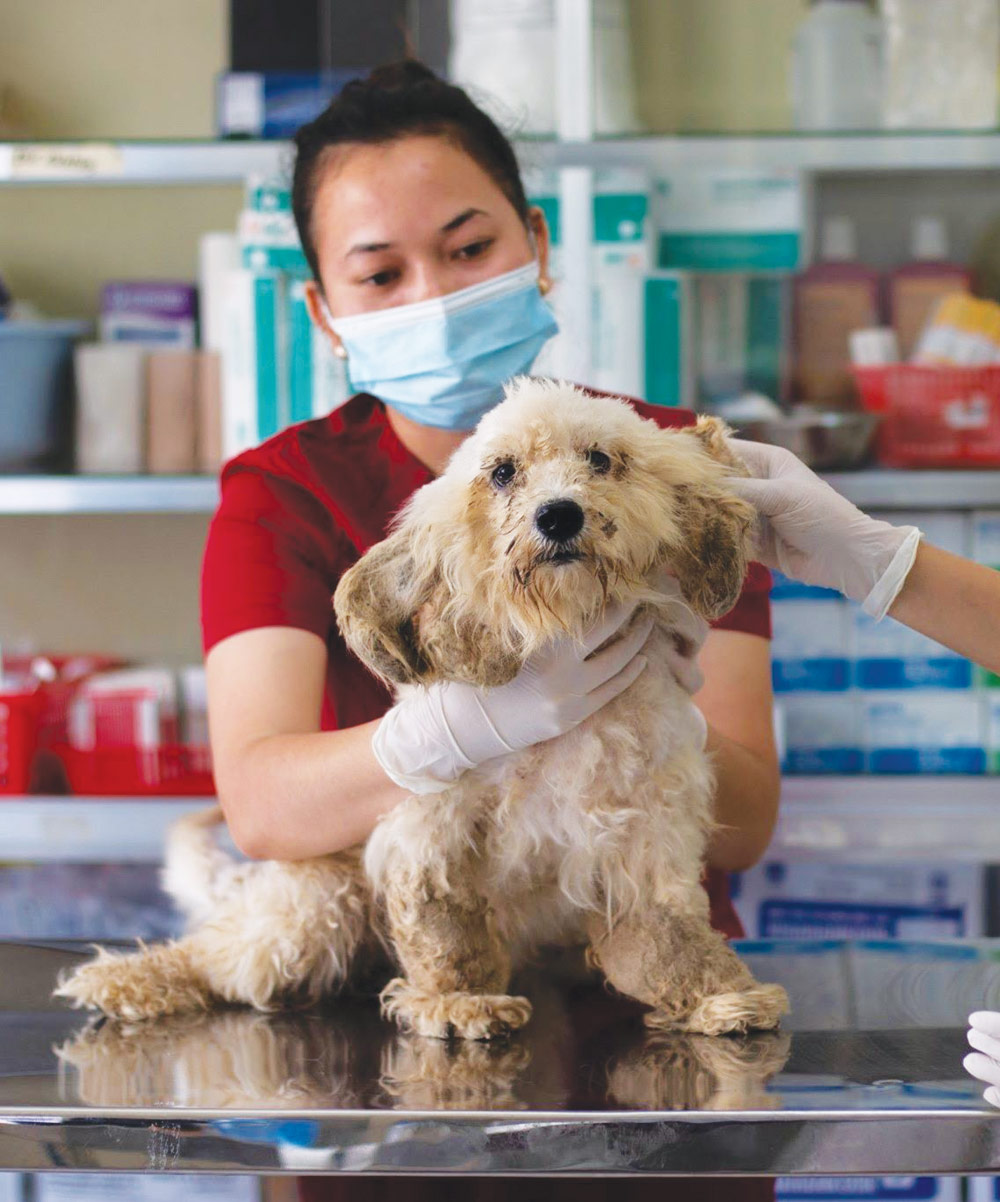
Photos provided by Project AnimalAid
istorically, when a veterinary clinic upgrades its equipment or closes its doors, the remaining items either collect dust or end up in a landfill, as repurposing has never been a big thing in the industry. But thanks to Project AnimalAid, a Boulder, Colorado-based nonprofit, that’s no longer the case, because much of this no-longer-needed equipment and unused supplies become lifelines for animals around the globe. The organization collects everything from syringes and gloves to microscopes and patient monitors, distributing them to animal welfare organizations in more than 40 countries.
“Dr. Candy Brad, our founder, realized that equipment sitting unused in veterinary practices could actually save lives,” shares Meghan Curtis, executive director of Project AnimalAid.
“She realized she might have that equipment gathering dust in her own clinic and offered to send it,” Meghan explains. “That was the start of everything, and her lightbulb moment.”
Originally called Project V.E.T.S., the organization formally became a nonprofit in 2008 with its founding board comprised of Dr. Brad and four other wildlife and animal lovers from Boulder who were committed to ensuring equipment reached veterinarians who truly needed it.
“At the time, veterinary medicine was different,” shares Meghan. “There were more independent practices, and veterinarians invested huge amounts of time and money in their equipment. They didn’t want to throw anything away. Project AnimalAid was designed to give that equipment a second life—helping animals that really need it.”
Today, Project AnimalAid works with more than 120 partner organizations worldwide, ranging from small grassroots groups to larger wildlife sanctuaries.
“Our sweet spot is small to medium-sized organizations,” notes Maya Key, development director for Project AnimalAid. “They’re the ones who have the greatest need for equipment and supplies, and they can make the most impact with the resources we provide.”
Donations come from many sources; it can be a single box of supplies from a family who just lost a pet or pallets of surgical instruments from a corporate veterinary business. For instance, a husband and wife who had just lost their cat to mouth cancer donated a small box of syringes, IV fluid lines and needles, hoping their cat’s supplies could help other animals.


The process of receiving supplies is meticulous, as all incoming donations are sorted, inventoried and curated based on the specific needs of partner organizations.
The process of receiving supplies is meticulous, as all incoming donations are sorted, inventoried and curated based on the specific needs of partner organizations.
“Each partner sends us a list of what they need,” Maya explains. “If they work with wildlife, they might need different supplies than an organization serving donkeys or street dogs.
“We ship three to four times a year,” she continues, “and we always encourage partners to reach out if they have urgent needs between shipments.”
The types of supplies in highest demand are often basic but essential: gloves, syringes, bandaging materials, suture and surgical instruments. Equipment requests include microscopes, patient monitors, IV fluid pumps and more.
“Many of our partners perform surgeries without any monitoring equipment,” shares Maya. “Sending them a patient monitor allows them to provide safer, more comprehensive care than ever before. It’s transformative for them and the animals they treat.”
“We make sure everything works as it should,” Maya assures. “Supplies like syringes or fluids may be slightly expired, which our partners are fine with, but surgical gloves and suture are items we’re stricter on. They can’t fail.”
Project AnimalAid also coordinates facilitated donations for larger equipment that can’t be shipped internationally. For example, a partner in Pennsylvania had an X-ray machine and a CT scanner they no longer needed, so the organization matched them with a local partner who could pick it up.
“Without our program, those items might have gone to a landfill,” Meghan says. “Instead, they’re being used to expand veterinary care in that community.”
The nonprofit recently received its largest donation ever: 17 pallets of surgical instruments from Sklar Instruments in West Chester, Pennsylvania.
“These instruments were set to be incinerated,” explains Meghan. “The value and quantity were incredible, and they will be used by our partner organizations worldwide.


Project AnimalAid’s dual mission focuses on animal welfare and sustainability.
“On average, we keep 10 to 20 tons of usable product out of landfills each year,” notes Meghan. “It’s about making sure resources are used where they’re needed most, while helping the environment.”
The organization has made tangible differences in communities worldwide. One notable success story comes from Tanzania and a vet who works with street dogs, many of which are injured in traffic accidents.
“Before Project AnimalAid, his only options were euthanasia or amputation,” Meghan shares. “We sent him high-quality orthopedic equipment, and a veterinary orthopedic surgeon volunteered to train him. Now, countless dogs in his community have four legs because of this collaboration.”
Looking to the future, Meghan and Maya hope to expand the nonprofit’s reach even further.

Maya adds that the nonprofit also hopes to explore partnerships with pharmaceutical companies to distribute short-gated products and support even more grassroots organizations.
“There’s still so much need, and we want to keep providing resources that allow veterinarians to practice the best medicine possible,” she adds.
From a single lightbulb moment in Africa to a global network of veterinary support, Project AnimalAid continues to turn unused supplies and equipment into life-saving tools, changing the way animals are cared for worldwide.
For more information on Project AnimalAid, visit www.projectanimalaid.org
