




A Holistic Approach
Photos provided by CASCO Pet
istorically, veterinary clinic design has tended to prioritize clinical functionality over environmental comfort. No truer has this been than when it comes to kenneling. Traditionally, kennel setups have been geared towards containment over enhancing the wellness of pets and the veterinary teams who care for them. However, there is growing recognition of the impact of kennels on patient stress and well-being, staff workflow and efficiency, and overall clinic environment.
In an industry known for innovation, kennels are increasingly becoming an important feature of high-quality veterinary care, in step with design and transparency trends. The following will explore the impact of kennel design on patient and staff stress levels, and how environmental factors can assist in creating a more calming atmosphere for better well-being.
Every animal that comes to a clinic has a unique temperament, medical history and treatment requirements. While it might sound obvious, what works well for a sociable Black Labrador will not work for a nervous Maine Coon that values its privacy. Design elements now include species-specific zones; reimagined waiting room spaces; biophilic touches; softer, more natural lighting; calming color palettes1 and targeted noise-reduction measures.
Californian veterinary start-up Modern Animal, for example, handles all client communications through an app to reduce front desk noise, which it credits with lowering patient stress levels. And Canadian veterinary clinic Fen Vet has eliminated waiting rooms entirely so that clients head straight into exam rooms to minimize animal contact.
Additionally, there is the transparency trend with open spaces and glass partitions, removing the traditional divide between front and back of house. This approach is designed not only to improve aesthetics but also visibility and ease of monitoring, fostering better client trust and satisfaction.
When thoughtfully designed, these spaces can actively reduce stress, support recovery, and improve outcomes for both animals and veterinary teams. However, poor kennel design and layout combined with a lack of enrichment can significantly affect animal well-being.2
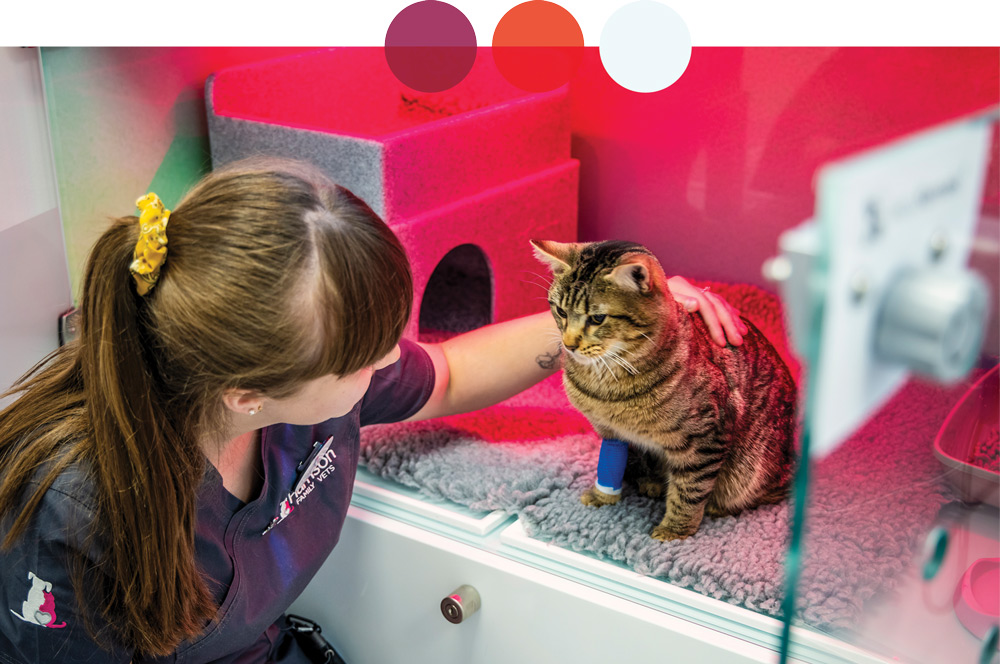
There are several factors within conventional kennel environments that can contribute to this. Visual contact with other patients and auditory and olfactory overstimulation can trigger negative psychological and physiological responses, such as high cortisol, increased heart rate and reduced sociability, which can impact an animal’s natural behaviors.2 This can complicate handling during examinations or treatment, raising risk of injury to animal or staff and impeding patient recovery.
In a separate survey, 75% of veterinary professionals highlighted the “excessive noise” generated by steel kennels as a challenge, with one in five noting it resulted in extended patient recovery time. In some facilities, noise levels from barking dogs and reverberating stainless steel kennels exceed 100 dBA—a level that can be damaging to hearing.3
Traditional steel bars can also be notoriously hard to clean (posing biosafety issues) and often poorly ventilated, inhibiting adequate odor control. Over time, these environmental pressures can reduce operational effectiveness and eat into staff morale.

- Materials
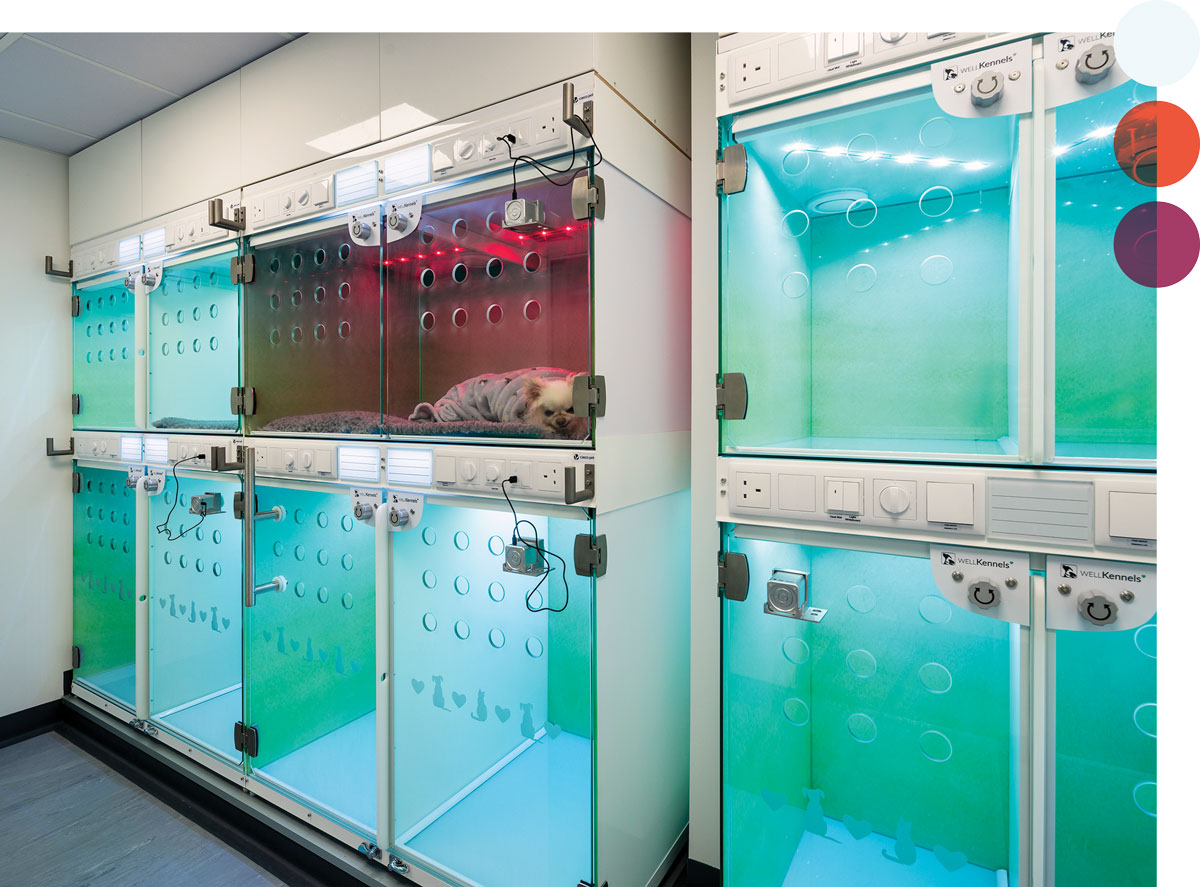
Moving away from traditional steel cages towards acoustic-friendly materials, such as safety glass,4 can help maintain a calmer atmosphere for patients and staff by significantly dampening noise and vibration from barking and tail thumping and eliminating the loud clang of metal. Glass surfaces and doors are also easier to clean and disinfect while serving as effective sneeze barriers—boosting hygiene, reducing airborne infection risks and cutting down on cleaning time, freeing staff to devote more time to patient care. - Airflow
Thoughtful choices in airflow can also help create a sense of safety for animals, especially those in unfamiliar surroundings or vulnerable states. Dogs and cats have a strong sense of smell, which can heighten nervousness. Kennels offering advanced ventilation systems can significantly curtail odors and enable consistent air circulation, diluting airborne infection agents. - Temperature Control
High-tech, patient-focused designs allow for tailored temperature control with built-in heat zones to tailor the kennel environment to the individual care and recovery needs of the patient inside. This allows patients to self-regulate and rest and recover at their ideal comfort point, reducing risk of overheating or other temperature-related issues.
- Lighting
Advances in kennel lighting can improve cleaning protocols. Specialized UV lighting illuminates organic materials to maximize biosecurity while reducing maintenance time. These lighting systems can be tailored to a patient’s needs, with “recovery” red lighting enabling continuous observation without disrupting a patient’s rest. - Modular Systems
Modular, stackable systems have several benefits, too; they can be easily configured to exact requirements, whether for emergencies, isolation or quarantine, affording veterinary clinics the freedom to adjust to almost any situation. - Cabinetry and Storage
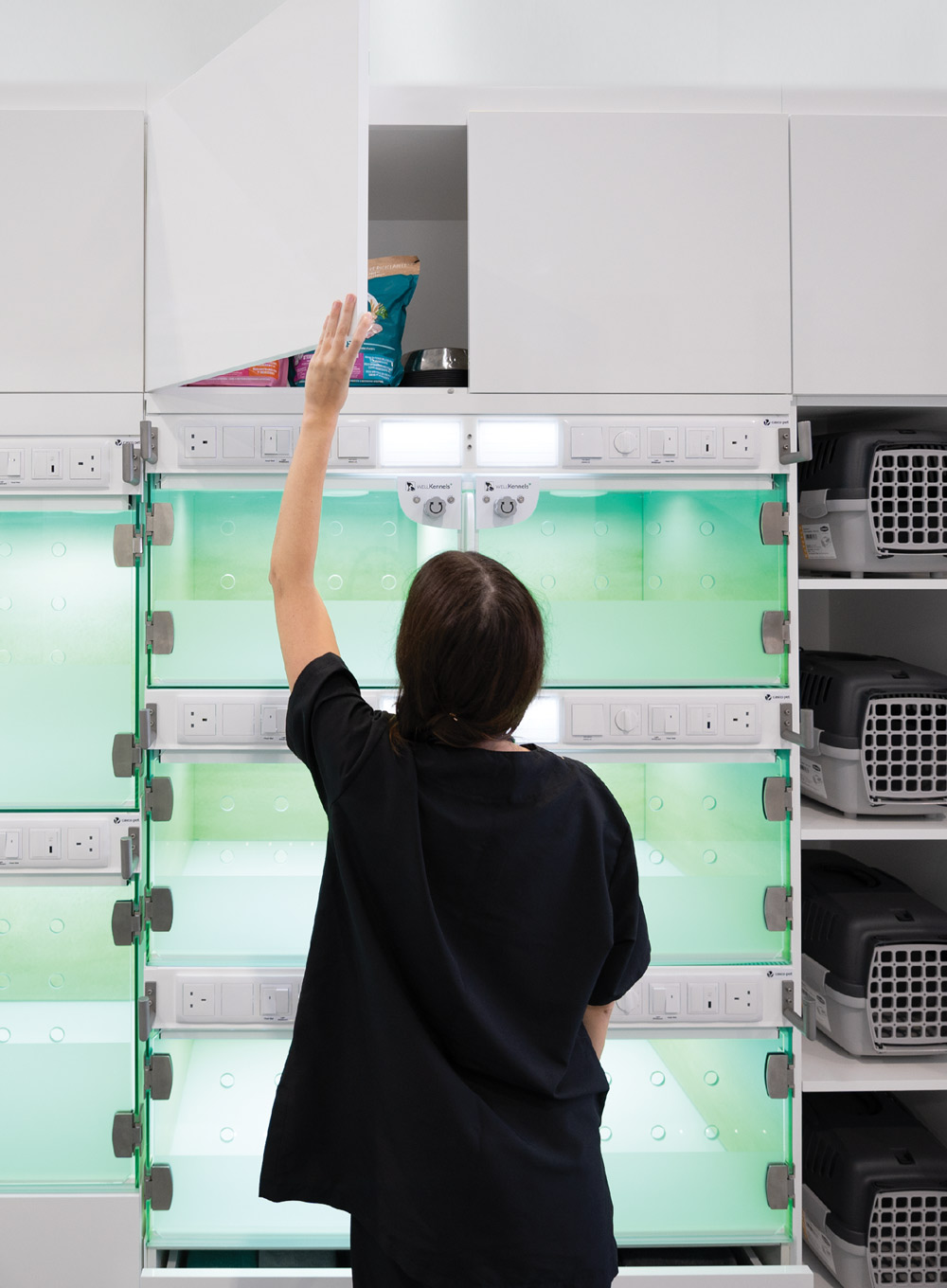
Equally important is kennel ward cabinetry and storage. For veterinary teams, well-planned cabinetry that optimizes space and keeps equipment and consumables organized and easily accessible can make a noticeable difference. It helps streamline tasks, optimize workflow and decrease patient disturbance. Small efficiencies like these contribute to a quieter, more organized workspace and a calmer clinic atmosphere.
Ensuring a calmer, more comfortable kennel environment can go a long way to enhancing care and recovery by mitigating stress and improving both patient and personnel experience. Well-rested animals recover faster, staff work more efficiently and clients feel confident in the care provided, strengthening a clinic’s long-term success.
Rethinking the kennel environment is therefore an essential step in aligning veterinary practice with contemporary standards of animal and staff well-being.
- Fear Free Vet Design. Hinge Studio. https://www.hingestudio.net/fearfreevetdesign/
- Lloyd, J. (2017). Minimising Stress for Patients in the Veterinary Hospital: Why It Is Important and What Can Be Done about It. Veterinary Sciences, 4(2), 22. https://doi.org/10.3390/vetsci4020022
- Workload and understaffing ‘leading causes of veterinary burnout’, survey finds. CASCO Pet. https://gk.news/cascopet/press-release/workload-and-understaffing-leading-causes-of-veterinary-burnout-survey-finds/
- Edwards, P., Smith, B., McArthur, M., Hazel, S. (2019). Fearful Fido: Investigating dog experience in the veterinary context in an effort to reduce distress. Applied Animal Behaviour Science. https://doi.org/10.1016/j.applanim.2019.02.009