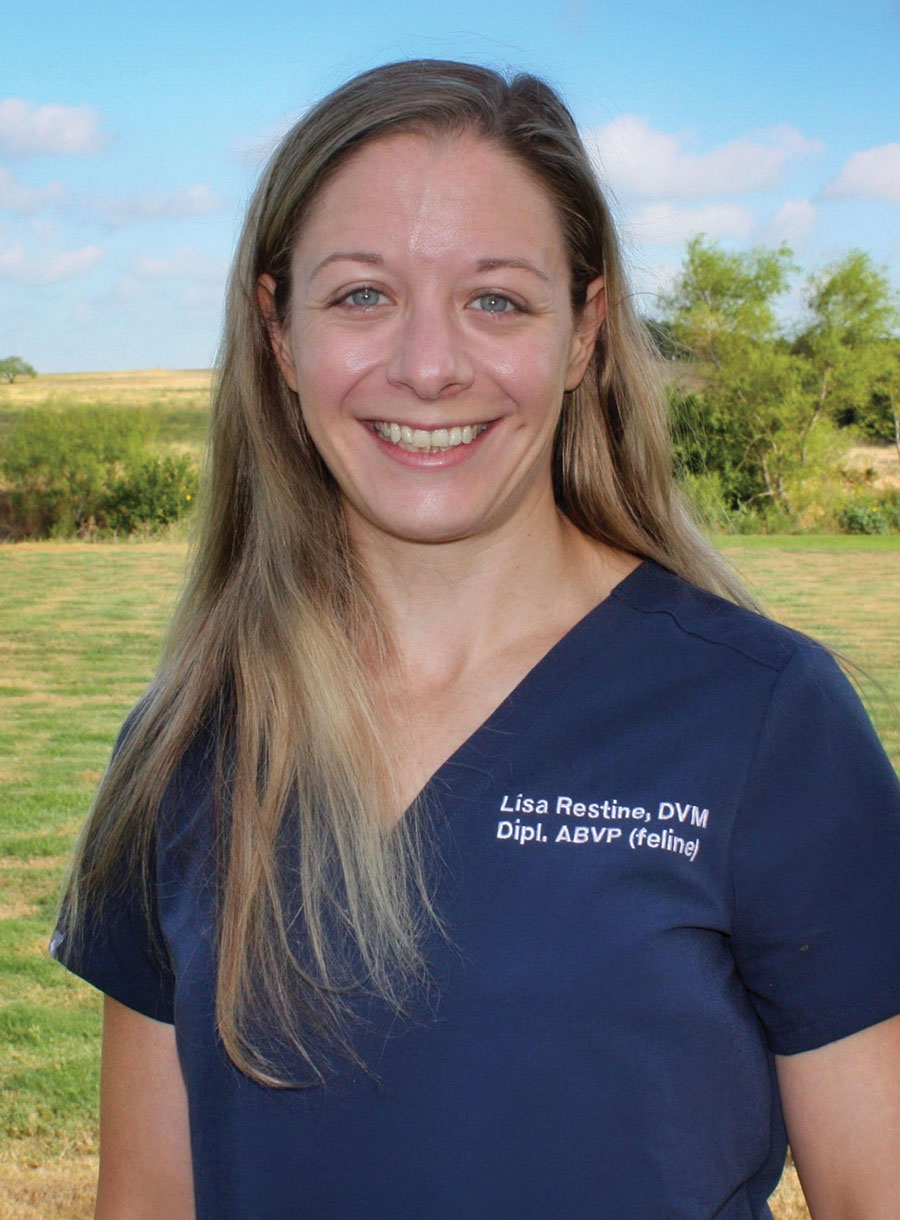





By Dr. Lisa Restine, DVM, DABVP (feline)
While an estimated 74 million cats reside in U.S. households1, only 40% receive annual veterinary care, compared to 82% of dogs.2
he growing popularity of cats as pets presents unique opportunities and challenges for veterinary practices and veterinarians interested in feline specialization. However, options and treatment advances are breaking down barriers to care, paving the way for a brighter future in feline medicine.
Their natural survival instincts, including heightened awareness of danger and a tendency to conceal illness, are often amplified in the unfamiliar environment of a veterinary practice, triggering fear, frustration and even pain. This stress can induce a range of physiological responses, from changes in leukogram and biochemistry results to elevated cortisol levels and altered behavior, potentially skewing test results and complicating accurate diagnosis.2
So, what steps can be taken to mitigate these stressors and improve the veterinary experience for feline patients?

While practices do not have to be “cat-only” to be “cat-friendly,” the Feline Veterinary Medical Association’s Cat Friendly Practice (CFP) program offers a structured pathway to creating a less stressful environment for feline patients and their caregivers.
Practices or individuals considering these certifications should evaluate the training time and potential benefits of increased client loyalty and revenue. Many cat-friendly strategies are practical and low-cost, such as adapting to the cat’s comfort level and performing the wellness exam on the floor, in the carrier or in the owner’s arms, which can be implemented with a simple staff training session.
The American Animal Hospital Association has 46 AAHA-accredited cat-only practices in the U.S.,3 and the American Board of Veterinary Practitioners (ABVP) Certified Veterinarian program offers another pathway to becoming a recognized feline specialist, with 96 ABVP Feline diplomates recognized at the end of 2024.4
While practices do not have to be “cat-only” to be “cat-friendly,” the Feline Veterinary Medical Association’s Cat Friendly Practice (CFP) program offers a structured pathway to creating a less stressful environment for feline patients and their caregivers. There are currently 880 CFPs certified by the Feline VMA, with another 355 in progress.5
Research published in The Journal of Feline Medicine and Surgery showed that CFP clinics experienced higher mean visits per year per patient, performed diagnostic testing at 12% more clinical visits, generated higher annual revenue per feline patient, had higher instances of patients undergoing bloodwork or urinalysis, and identified a greater number of cats with clinical findings.6
Regardless of the chosen path—CFPs, cat-only clinics or feline specialization—prioritizing the feline patient experience will ultimately break down barriers to care, save lives and educate pet owners, benefiting all stakeholders: the veterinary professional, the practice, the team and the patient.
Non-pharmaceutical strategies are equally important, given the variability of anxiety medication regulations across states. Consider simple, non-medical tactics such as gently wrapping the cat in towels to provide deep-touch pressure and a sense of security. Educating pet parents about what to expect during the visit and maintaining a quiet environment can further enhance the experience, supporting improved compliance and increasing the likelihood of return visits.

Veterinary professionals play a crucial role in promoting feline-specific nutrition guidelines, emphasizing that cats have unique behavioral and nutritional needs.
While veterinary visits typically focus on vital signs such as heart rate, respiratory rate, temperature and pain, a fifth vital sign—nutrition—is also a key component of the feline exam. Veterinary professionals play a crucial role in promoting feline-specific nutrition guidelines, emphasizing that cats have unique behavioral and nutritional needs.
As true carnivores, cats require certain nutrients to be supplemented in their diets. For example, cats lack the ability to convert beta-carotene into vitamin A and require dietary taurine supplementation, which is not necessary in canine diets. It’s also important to consider life stage, with kittens and nursing mothers requiring more fat, protein and nutrient-dense foods, while senior cats may benefit from reduced fat intake to maintain a healthy weight.8
In terms of feeding behavior, cats tend to prefer grazing—consuming 10-20 small meals throughout the day if given the option—whereas most adult dogs prefer meal feeding. By prioritizing nutrition and understanding the unique needs of feline patients, veterinary professionals can provide more comprehensive and effective care.

The future of the field hinges on continued research and learning, especially in cutting-edge advancements in feline medicine, and on the growing number of feline specialists who are dedicated to obtaining global certifications and advancing the standard of care.
By embracing these opportunities, veterinary professionals can not only improve the lives of their feline patients, but also inspire and mentor future generations of veterinarians, ensuring that all cats receive the comprehensive and compassionate care they deserve.
- “U.S. Pet Ownership Statistics.” (2024). American Veterinary Medical Association. https://www.avma.org/resources-tools/reports-statistics/us-pet-ownership-statistics
- “World of the Cat Report 2025.” (2025). Hill’s Pet Nutrition. https://na.hillsvna.com/en_US/resources-2/view/244
- Singler, E. (2023, August). “The Cat-Only Practice.” AAHA Trends, https://www.aaha.org/trends-magazine/august-2023/f2-the-cat-only-practice/
- “Find a specialist.” (2024). American Board of Veterinary Practitioners. https://abvp.com/
- “Cat Friendly Practice® Program.” (2025). https://catvets.com/cat-friendly/cfp/
- St Denis K, Saffire A, Michael H, et. al. (2023). Cat Friendly Practice improves feline visits, resulting in increased laboratory testing and increased diagnosis of certain common feline conditions. Journal of Feline Medicine and Surgery. 2023;25(11). doi:10.1177/1098612X231204199
- Lamminen T, Doedée A, Hyttilä-Hopponen M, Kaskinoro, J. (2022). Pharmacokinetics of single and repeated oral doses of pregabalin oral solution formulation in cats. Journal of Veterinary Pharmacology and Therapeutics, 45, 385–391. https://doi.org/10.1111/jvp.13061
- “How to Choose the Right Cat Nutrition for Your Cat.” (2017). Hill’s Pet Nutrition. https://www.hillspet.com/cat-care/nutrition-feeding/choosing-the-right-cat-nutrition